AI Mapping
How business facts, services, locations and proof become clear entities before distribution.
Open AI Mapping ->Documentation hub
Use this hub to understand AI Mapping, controlled feeds, API examples and the operational path before a technical demo or integration review.
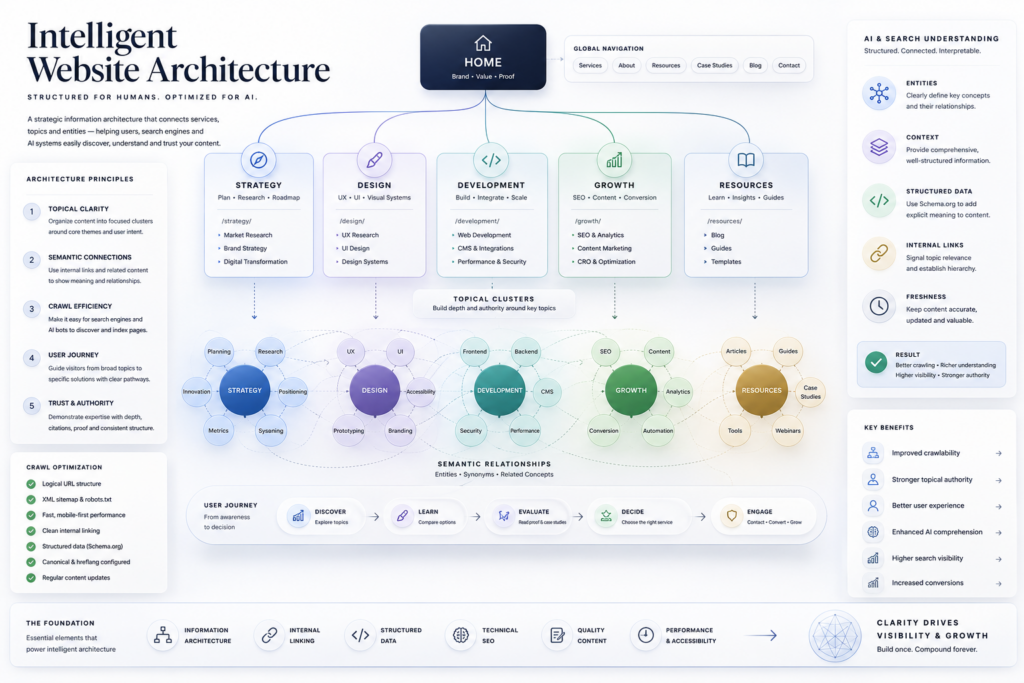
How business facts, services, locations and proof become clear entities before distribution.
Open AI Mapping ->How controlled data reuse supports partners, systems and AI-ready public surfaces.
Open feeds ->Example-oriented guidance for teams reviewing authentication, tenants and entity endpoints.
Open API examples ->One public entity, multiple departments or a portfolio require different controls.
Sources, screenshots, dates and assumptions should be reviewable before claims.
Only approved facts should be exposed through public or partner-facing outputs.
Production use needs monitoring, audit history and a controlled change path.
Start with AI Mapping, then review feeds and API examples. That sequence keeps the commercial story connected to real data, controls and operational limits.
Start reading ->Semantic FAQ
Start with AI Mapping, then review feeds and API examples. That order keeps implementation connected to entity clarity and proof governance.
No. The documentation explains public concepts, payload planning and integration logic without exposing private runtime details.
AI Mapping clarifies company facts, services, locations, proof, relationships and what can safely be distributed.
They distribute reviewed, AI-ready data to websites, partners, internal systems or controlled public surfaces.
No. Public API examples are planning patterns, not live credentials or private implementation details.
Teams should review tenant model, approved data boundaries, proof quality, audit requirements and observability needs.
A guided demo is most useful when entity facts, distribution goals and controls are already clear.